
How Retail Media Helps Reach Local Shoppers
In this article
Someone searching for an oil change on their phone is not looking for a brand story. They want a nearby option, a clear price, and a reason to choose one shop over another. Retail media helps put the right offer in front of that shopper while the decision is still happening.
For local merchants, that timing matters. A promotion seen after someone has already picked a store is easy to ignore. A promotion shown while they are browsing, comparing, or preparing to buy can bring in a new customer that same day. For shoppers, it means less searching and faster access to savings on the things they already need.
What retail media actually means
Retail media is advertising that appears within a retailer's or commerce platform's own digital environment. It can include sponsored product listings, promoted offers, digital displays, search placements, app notifications, and deals shown to shoppers based on what they are browsing or buying.
Large retail media networks often use their own shopping data to help brands reach customers. For example, a grocery store may offer a food brand the chance to promote a coupon to shoppers viewing snacks or adding lunch items to their cart. The retailer controls the placement. The brand pays for visibility, clicks, sales, or a combination of those results.
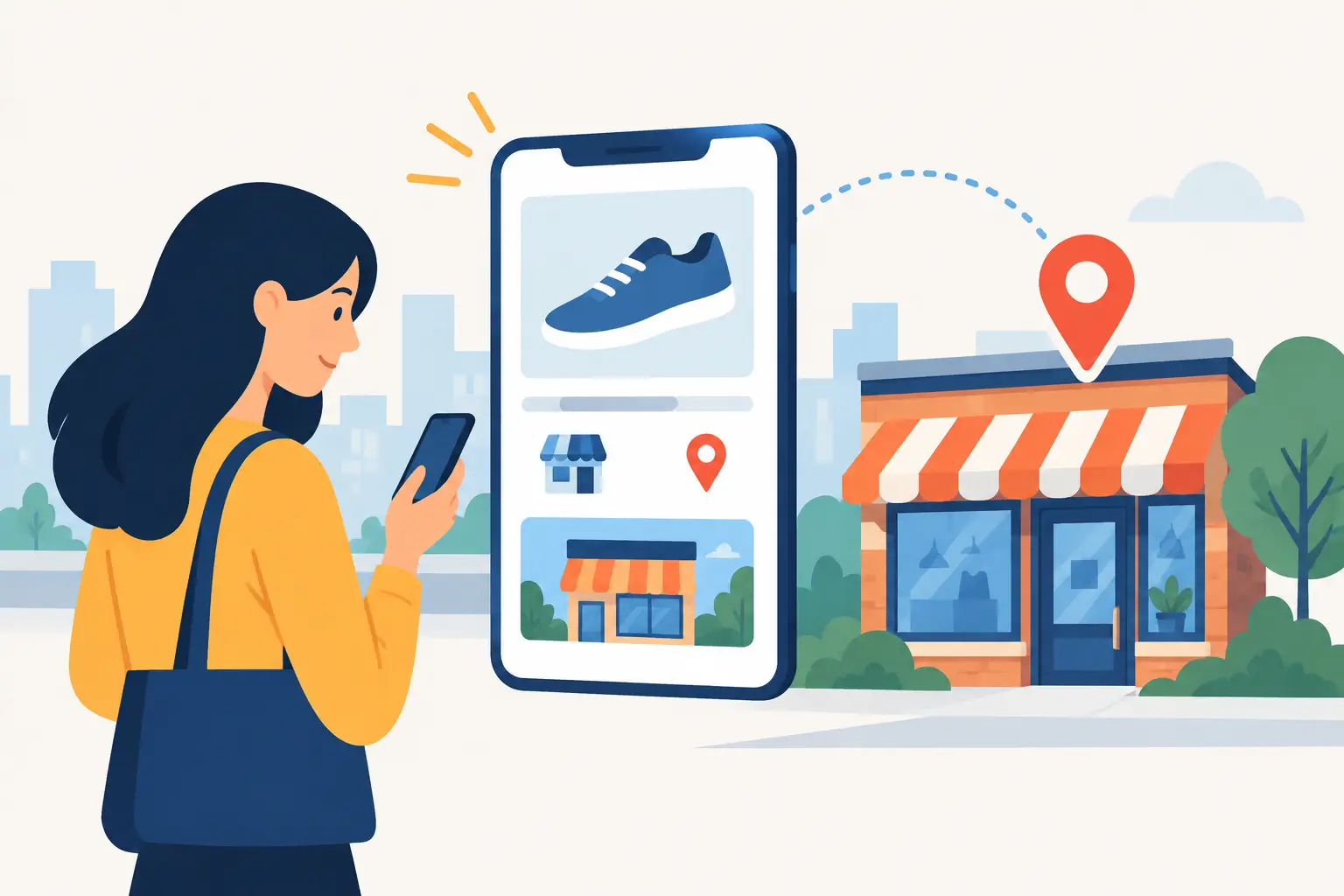
The same principle works in local commerce. A mobile deal platform can feature a restaurant special, salon discount, appliance offer, or auto-service promotion to people actively looking through those categories. It is not the same as a national retailer's ad network, but it shares the core advantage: the offer appears close to the moment of purchase.
That difference is worth understanding. Retail media is not simply any online ad. A broad social ad may reach people based on interests, age, or past behavior. Retail media reaches people inside a shopping-minded space, where they are already looking at products, stores, services, prices, or coupons.
Why retail media gets attention from ready-to-buy customers
Most advertising has to create demand before it can capture it. Retail media often starts closer to the finish line. The shopper may already know they need groceries, a phone accessory, a haircut, or a car repair. What they need now is a good option.
That is where a relevant discount can earn attention. A 15% offer for a local beauty service will not matter to every person scrolling through their phone. It can matter a lot to someone searching for a nearby appointment this weekend. A coupon does more than reduce the price. It gives the shopper a simple reason to act now rather than put off the purchase.
Relevance beats interruption
People are used to seeing ads everywhere. They have also learned to skip them quickly. A retail media placement has a better chance of being useful because it can match the category, location, and timing of a shopper's search.
A commuter checking deals near work may respond to a quick lunch special. A parent browsing household offers may use a grocery or appliance discount. A driver looking for routine maintenance may choose the shop with a straightforward oil-change offer. The message does not need to be clever if the value is clear.
Mobile makes the path shorter
For deal-seeking customers, the best experience is simple: find an offer, read the terms, show it from a phone, and save. No printing. No hunting through old emails. No confusing steps at checkout.
That short path is especially valuable for local businesses. A shopper might see a promotion while standing near a store, waiting for an appointment, or planning errands for the afternoon. If redemption is difficult, the moment disappears. If it takes a few taps, the business has a real chance to turn interest into a visit.
Retail media is not only for national brands
Major brands can spend heavily on sponsored placements, detailed audience segments, and large campaigns. Local merchants do not need that kind of budget to benefit from commerce-based promotion. They need a focused offer and a clear idea of who should see it.
A neighborhood restaurant can promote a weekday lunch deal to nearby workers. A salon can feature a first-visit discount before a slow appointment window. An electronics shop can move a specific accessory category with a limited-time offer. A service provider can use a coupon to turn a routine need into an immediate booking.
The trade-off is margin. A discount may bring in a customer who would have paid full price, so merchants should not treat every offer as automatic growth. The smarter approach is to promote services with available capacity, products that need visibility, seasonal inventory, or offers that create a reason for a first visit.
For some businesses, the first transaction is only the beginning. A great first experience can lead to repeat visits, referrals, add-on purchases, and a customer who returns without another discount. That makes the true value of a campaign larger than the initial redemption.
How to make retail media offers work harder
A promotion should answer three questions in seconds: What do I get? How much do I save? Where and when can I use it? If any answer is hard to find, shoppers may move on to the next deal.
Start with one offer that is specific. “Save on auto service” is vague. “Save $20 on a full-service oil change” gives a customer something they can understand and compare. Specific offers also make it easier for the merchant to track which promotion drove action.
Set terms that protect the business without burying the value. If an offer is for new customers, weekday visits, or a minimum purchase, say so clearly. Fine print may be necessary, but it should not feel like a trap. A customer who feels misled is unlikely to come back.
Location is just as important as price. A deep discount across town may lose to a smaller offer five minutes away. Include the neighborhood, service area, hours, and any booking requirement. Local shoppers want to know whether they can actually use the deal during their normal routine.
Finally, give the offer a deadline when urgency is real. Limited-time promotions can help a business fill slower days or highlight a seasonal service. But constant “ending soon” language can lose credibility. Use urgency to support a genuine business goal, not to pressure every customer.
Measure more than clicks
Clicks can tell a merchant whether an offer caught attention. They do not tell the whole story. A strong local promotion should be judged by redemptions, store visits, bookings, average order value, and the number of customers who return later.
A campaign with fewer views may outperform one with huge reach if the audience is closer to the business and more ready to buy. For example, 30 redeemed offers at a profitable service location can be more valuable than thousands of impressions from people who will never visit.
Merchants should also watch what happens at the counter. Are customers using the offer correctly? Are staff members able to redeem it without delays? Do customers ask for a related product or service? Frontline feedback often reveals why a promotion is working or where friction is costing sales.
Mobile Coupon can help merchants place timely local offers in front of customers who are already looking to save. The best results come when the deal is easy to understand, easy to redeem, and worth using today.
What shoppers should expect from better retail media
For shoppers, good retail media should feel helpful, not intrusive. It should show relevant deals, make savings easy to verify, and provide enough details to avoid surprises. A useful promotion respects the customer's time as much as it respects their budget.
Privacy matters here, too. Shoppers should have clear choices around account settings, notifications, and data use. Personalized offers can be convenient, but customers should not have to trade away control just to see a discount.
The practical win is simple: when a local deal appears at the right moment, customers spend less time searching and more time choosing. For merchants, the opportunity is to be the business they choose when the need is real, the offer is clear, and the phone is already in their hand.
Put these ideas to work on Mobile Coupon
Post a deal in minutes. Shoppers near your store see it in the app and on mobilecoupon.ca, and your followers get a notification.
List your business