
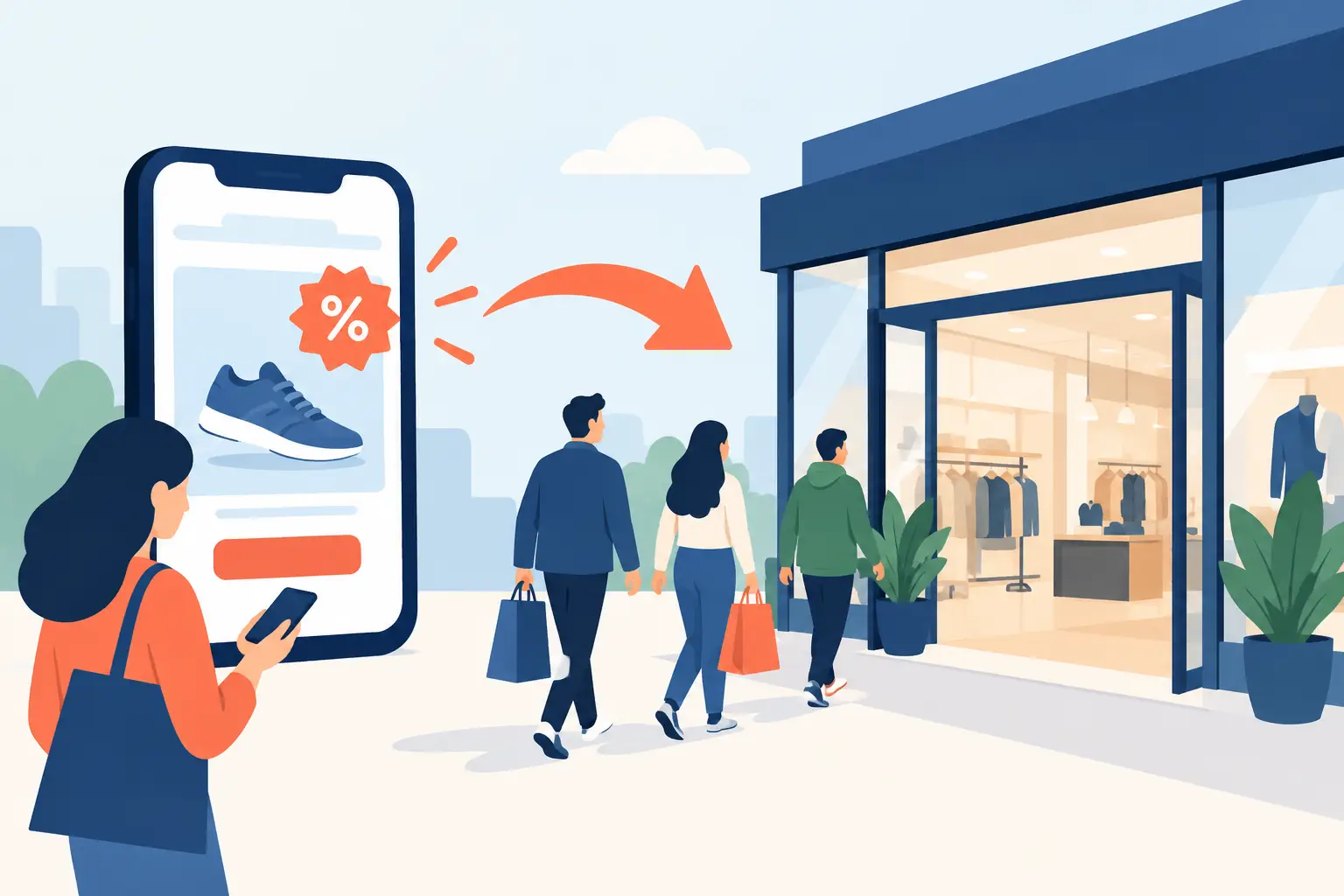
Retail Footfall Results: Turn Deals Into Store Visits
In this article
A great local offer should do more than collect clicks. It should get real people through your door, ready to browse, book, buy, or come back later. That is what retail footfall results are all about: seeing whether your promotion creates store visits that lead to meaningful sales.
For local retailers, service providers, and neighborhood businesses, foot traffic is not a vanity metric. A busy store can create more opportunities for product discovery, staff conversations, add-on purchases, and repeat customers. The challenge is connecting that activity to the promotions you run, especially when shoppers discover offers on their phones and redeem them in person.
What Retail Footfall Results Actually Tell You
Retail footfall results measure the response your business gets in the real world. At the simplest level, they show whether more people entered your location after a campaign launched. But the number becomes far more useful when you compare it with coupon views, saves, redemptions, transaction values, and repeat visits.
A promotion that generates 100 redemptions may look successful. Yet the real story depends on what those customers did next. Did they spend above the coupon value? Did they buy a service package, add another item, or return the following month? Or did they only redeem the lowest-priced deal and leave?
The goal is not just more traffic. It is qualified traffic: nearby shoppers with a clear reason to visit and a good chance of becoming customers.
For example, an auto shop might offer money off an oil change during a slower weekday period. The offer can bring in drivers who need routine maintenance, while the visit gives the team a chance to identify future service needs. A beauty retailer may use a limited-time discount to introduce shoppers to a new product line. A local electronics store may promote a deal that gets customers in the door, where they can compare accessories and receive help from staff.
Each business has a different definition of a valuable visit. Your reporting should reflect that.
Start With a Clear Store-Visit Goal
Before posting a deal, decide what you want the promotion to change. “More customers” is a good starting point, but it is too broad to guide the offer. A stronger goal could be increasing Tuesday afternoon visits, moving seasonal inventory, bringing in first-time customers, or encouraging repeat appointments.
This decision shapes the offer itself. A deep discount may create fast volume, but it can also attract shoppers who only buy when the price is low. A smaller incentive with a minimum purchase requirement can protect margins and encourage a larger basket. Neither approach is always better. It depends on your inventory, staffing, average transaction value, and the kind of customer you want to attract.
For many local businesses, the best offers are easy to understand in seconds. Think “$15 off a $75 purchase,” “free add-on with a booked service,” or “20% off select in-store items through Sunday.” Shoppers should know what they save, where they can use it, and when it expires without reading fine print for five minutes.
Use Mobile Coupons to Create a Direct Path to Your Door
Mobile coupons work because they meet shoppers where decisions happen: on their phones, often close to the moment of purchase. Someone looking for an oil change, a grocery deal, or a local gift can find an offer, save it, and show it at checkout without printing anything.
That convenience matters. Paper coupons get forgotten. Generic ads can be seen and ignored. A phone-based offer gives a shopper a reason to act while the deal is still top of mind.
Platforms such as Mobile Coupon can help merchants put timely offers in front of people actively looking to save locally. The value is not just exposure. It is the chance to turn deal discovery into a measurable store visit with a clear redemption moment.
Keep redemption simple for your staff, too. If the process is confusing, customers wait, employees get frustrated, and the offer can lose its appeal. Decide whether shoppers will show a screen, use a promo code, or mention the deal at checkout. Train every shift on the same process before the promotion goes live.
How to Measure Footfall Without Guesswork
You do not need an enterprise analytics setup to start learning from store traffic. Consistent tracking is more valuable than complicated tracking you never use.
First, establish a baseline. Look at typical visits, transactions, and sales for the same days and hours before your promotion begins. If you operate a restaurant, salon, or service business, appointments and walk-ins may be more useful than door counts. If you run a retail store, transaction counts can serve as a practical proxy when you do not have a people counter.
Then track promotion-specific activity. Record how many people view or save the offer, how many redeem it, and what each redeemed transaction is worth. Use a unique code or register button whenever possible. This separates coupon-driven sales from your normal traffic.
Finally, look beyond the launch week. Some offers produce an immediate spike but little lasting value. Others bring fewer people in at first, yet attract customers who return without another discount. Give each campaign enough time to reveal its pattern.
A useful weekly view can include these four numbers:
- Total in-store visits or transactions
- Coupon redemptions
- Average purchase value for redeemed offers
- Repeat purchases from coupon customers
These numbers help you spot the difference between activity and growth. A campaign can increase redemptions while reducing average order value, for instance. That may still be worthwhile if it fills slow periods or introduces customers to your business. But you should know the trade-off before repeating it.
Make the Offer Worth the Trip
A local shopper has choices. Your deal needs to feel timely enough to change their behavior. “Save on everything” is vague. “Save $10 on a $50 purchase this weekend” gives people a reason to plan a stop.
Urgency can help, but only when it is honest. A short redemption window, limited inventory, or a weekday-only offer can move traffic into the times you need it most. Do not create artificial pressure with terms that disappoint customers at checkout. Clear offers build trust, and trust makes the next promotion easier to redeem.
Location relevance matters as much as the discount. A commuter may respond to a quick service offer near work. Parents may care about savings near home on groceries, family dining, or everyday essentials. Shoppers browsing on a Saturday may be more open to beauty, apparel, entertainment, and larger retail purchases. Match the deal to the time, place, and likely need.
It also helps to think about the in-store experience after redemption. Make the deal easy to honor. Keep promoted items available. Give staff a quick way to recommend a useful add-on without making the customer feel pressured. A coupon may get the first visit, but a good experience earns the second one.
Turn One Store Visit Into a Customer Relationship
The strongest retail footfall results do not end at the register. Once a shopper has visited, give them a reason to remember you. That could be a future service reminder, an invitation to follow your business, a next-visit incentive, or simply excellent help from a knowledgeable employee.
Watch for patterns in what coupon customers buy. If shoppers redeem a deal on a basic service and regularly add a premium option, consider building that option into a future offer. If a category gets clicks but few redemptions, the discount may not be compelling enough, the conditions may be unclear, or the offer may be reaching people too far from your location.
Small adjustments can make a major difference. Test one variable at a time: the offer value, minimum spend, redemption window, featured category, or day of the week. Changing everything at once makes it hard to know what improved your results.
The next time you run a local deal, make every tap count. Give nearby shoppers a simple reason to visit, make redemption effortless, and track what happens after they walk in. That is how a quick discount becomes traffic you can build on.
Put these ideas to work on Mobile Coupon
Post a deal in minutes. Shoppers near your store see it in the app and on mobilecoupon.ca, and your followers get a notification.
List your business