
How to Measure Offer Conversions That Drive Sales
In this article
A coupon gets attention. A conversion proves it worked. If you are running a discount for oil changes, beauty services, lunch specials, electronics, or local retail, knowing how to measure offer conversions tells you whether that promotion brought in paying customers or simply collected taps and views.
For local merchants, this is where smarter marketing begins. You do not need a complicated analytics team or a giant ad budget. You need a clear offer, a way to track what happens after someone sees it, and a simple routine for reviewing the numbers.
Start With the Conversion You Actually Want
An offer conversion is not always a completed purchase. It depends on what your business needs most right now. A restaurant trying to fill weekday afternoons may count a redeemed lunch deal as a conversion. A salon may care more about booked appointments. A home service company may treat a phone call or quote request as the first conversion, then track whether that lead turns into a job.
Choose one primary action before launching the offer. This keeps the results clear. If your offer asks customers to do five different things, such as call, visit, sign up, purchase, and share, it becomes difficult to tell what worked.
For many local offers, the primary conversion will be one of these actions:
- A coupon redemption at checkout
- An online purchase using a promo code
- A booked appointment or reservation
- A tracked call, form submission, or direction request
- A first-time in-store visit tied to the offer
You can still watch other activity, but keep your main goal focused. A deal that generates 500 views and 40 redemptions may be a strong performer. A deal with 2,000 views and two redemptions may need a better discount, a clearer headline, or a more relevant audience.
How to Measure Offer Conversions Step by Step
The basic conversion rate formula is simple:
Conversion rate = number of completed conversions ÷ number of people who viewed or clicked the offer × 100
If 800 people view your mobile coupon and 32 customers redeem it, your redemption conversion rate is 4 percent. If 100 people click through to an appointment page and 15 book, your booking conversion rate is 15 percent.
The right starting number depends on the offer and the action you measure. A low-friction offer, such as showing a coupon in-store, may earn more redemptions than an expensive service that requires a phone consultation. Do not compare every campaign against one universal benchmark. Compare similar offers, categories, price points, and time periods.
Track the offer from view to sale
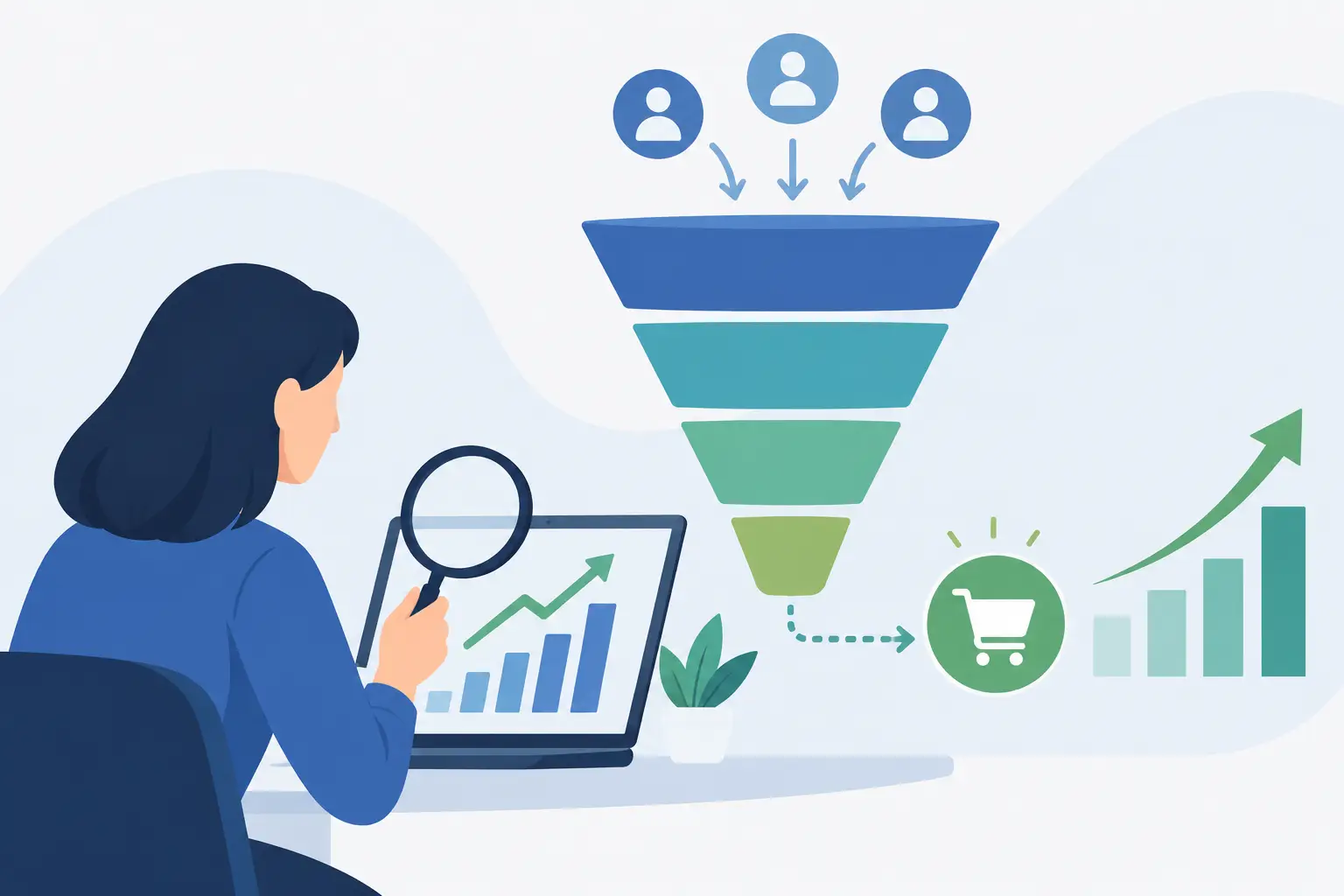
The strongest measurement setup follows the customer journey. Start with offer views, then look at clicks or taps, redemptions, purchases, and repeat visits. Each step answers a different question.
Views show whether people are seeing the offer. Clicks show whether the message is interesting enough to earn attention. Redemptions show intent. Completed sales reveal whether the promotion generated revenue.
A customer may save a coupon and redeem it days later. That is normal, especially for services like automotive maintenance, appliance purchases, or salon appointments. Give the offer a realistic redemption window before judging results too quickly.
Use a code that belongs to one campaign
A unique code is one of the easiest ways to connect a promotion to a purchase. Instead of using a general code like SAVE10 all year, create a campaign-specific code such as SURRYOIL15 or WEEKENDGLOW. The code does not need to be clever. It needs to be easy for staff to recognize and easy for customers to enter or show.
If the offer is redeemed in person, train employees to ask for the code or scan the mobile coupon before applying the discount. If employees forget this step, you lose valuable data and cannot accurately measure results.
For offers listed through Mobile Coupon, merchants can use a clear redemption instruction, such as “Show this offer at checkout” or “Mention code LOCAL20.” Keep the process fast. No paper, no hassle, just tap, show, and save.
Match redemption data to sales data
A redemption is useful, but revenue matters more. Review your point-of-sale records, booking system, or online store data to see what each redeemed offer produced.
Say you offer $15 off a $75 service. Fifty customers redeem it. The discount cost is $750. But if those customers spend an average of $110 each, the campaign produced $5,500 in sales before considering labor, product costs, and other expenses. That is a much clearer picture than simply saying the coupon was redeemed 50 times.
Watch for customers who spend more than the minimum required to use the deal. These add-on purchases often make a discount campaign worthwhile. A grocery offer may lead to a bigger basket. A car wash coupon may lead to an interior cleaning upgrade. A restaurant deal may bring in drinks, sides, and desserts.
Measure More Than the Redemption Rate
Redemption rate is a useful headline number, but it should not make every decision on its own. A high redemption rate can still be disappointing if the discount is too deep or if customers only buy the cheapest eligible item.
Review these four numbers together:
- Revenue per redemption: Total sales from redeemed offers divided by total redemptions.
- Average order value: The average amount each offer customer spends.
- Cost per acquisition: Your total promotion cost divided by the number of new customers gained.
- Repeat purchase rate: The percentage of offer customers who return and buy again after the first visit.
Repeat purchases deserve special attention. A first-time discount may have thin margins, but a customer who returns at full price can create far more value over time. If your business has a loyalty program, email list, or customer account system, tag offer users so you can see whether they come back within 30, 60, or 90 days.
Separate New Customers From Existing Customers
Not every redeemed offer represents new business. Some regular customers will happily use a discount they would have found anyway. That does not automatically make the campaign a failure, but it changes how you evaluate it.
Ask customers one simple question at checkout: “Is this your first visit?” For online orders, compare the email address or phone number with prior customer records. You can also create a first-time customer version of the offer if your goal is acquisition.
Existing customers can still be valuable when an offer brings them in during slow hours, encourages them to try a higher-margin product, or prevents them from choosing a competitor. Just be honest about the goal. A retention offer should be measured differently from a campaign designed to bring new people through the door.
Test One Change at a Time
When an offer underperforms, avoid changing everything at once. If you rewrite the headline, increase the discount, change the image, extend the deadline, and target a different area, you will not know which change made the difference.
Start with the offer itself. Is the savings obvious in the first few words? “$20 Off Any Oil Change” is easier to understand than “Special Savings Available on Select Automotive Services.” Customers move quickly on mobile. Lead with the dollar amount, the product or service, and any key conditions.
Then test the value. A bigger discount can increase redemptions, but it can also reduce profit. Sometimes a bonus works better than a price cut, such as a free add-on with a qualifying purchase. The best option depends on your margins, customer demand, and how easy it is for staff to deliver the offer.
Timing matters too. A weekday deal may help fill slower periods. A short weekend offer can create urgency. Seasonal campaigns can work well when they match a real customer need, such as tire service before winter travel or beauty offers before a major event.
Build a Simple Weekly Review
You do not need to check campaign data every hour. For most local businesses, a weekly review is enough to spot what is gaining traction and what needs attention. Use one spreadsheet or dashboard and record the same details for every offer: launch date, offer type, views, clicks, redemptions, sales, discount cost, new customers, and repeat purchases.
After a few campaigns, patterns will start to show. You may find that a modest grocery deal earns frequent repeat visits, while a large discount on a premium service gets attention but produces little profit. That is useful information. It helps you spend less time guessing and more time promoting offers that fit your customers and your business.
The goal is not to make every coupon go viral. The goal is to make each offer earn its place. Track the action, connect it to sales, and keep refining the deal until customers have a clear reason to tap, visit, and come back.
Put these ideas to work on Mobile Coupon
Post a deal in minutes. Shoppers near your store see it in the app and on mobilecoupon.ca, and your followers get a notification.
List your business