
How to Budget With Coupons Without Overspending
In this article
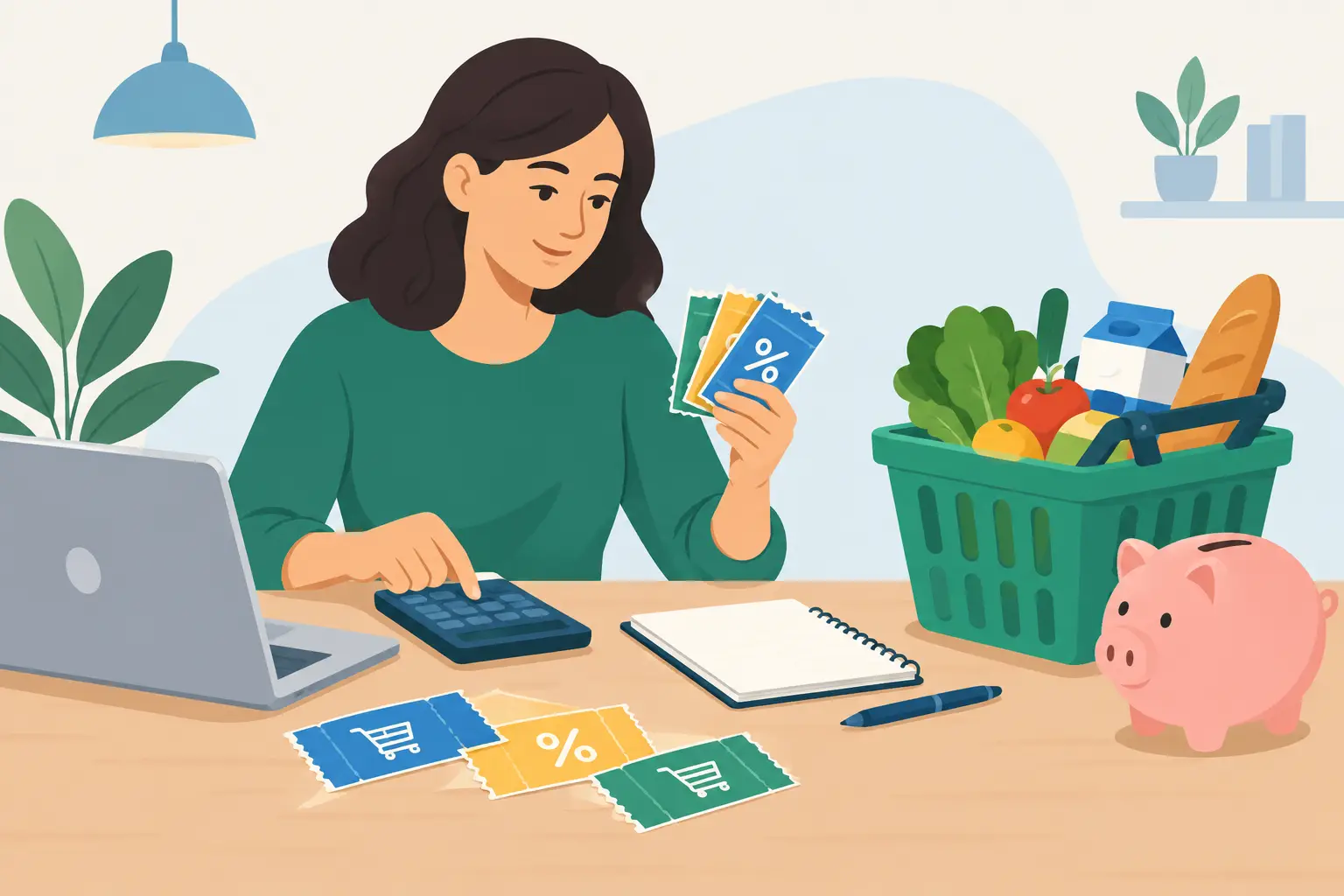
A coupon that saves you $10 is not a win if it gets you to spend $40 you never planned to spend. The real answer to how to budget with coupons is simple: build your spending plan first, then use deals to lower the cost of purchases already on that plan.
That approach keeps coupons useful instead of distracting. Whether you are paying for groceries, an oil change, a salon visit, electronics, or a weekend activity, your phone can put nearby savings within reach. No paper, no hassle, just a smarter way to pay less for the things you actually need.
Start Your Budget Before You Search for Coupons
Coupons work best when they support a clear monthly budget. Start with the categories that take the biggest bite out of your paycheck: housing, transportation, groceries, utilities, debt payments, childcare, and recurring subscriptions. Then set aside realistic amounts for flexible spending, such as dining out, personal care, clothing, entertainment, and local services.
You do not need a complicated spreadsheet to get started. A notes app, banking app, or simple budget tracker can do the job. What matters is knowing two numbers before you browse offers: how much you planned to spend and how much room is left in that category.
For example, if your grocery budget is $500 for the month and you have $85 left for the final week, a coupon is useful when it helps your planned $85 shop go further. It is less useful when it tempts you into an extra $30 of snacks, specialty drinks, or bulk items that will sit untouched in the pantry.
Give every coupon a job. Is it lowering a necessary expense, helping you stock up on a product you use regularly, or making an occasional purchase fit within your fun-money limit? If the answer is none of those, skip it.
How to Budget With Coupons by Category
Not every spending category deserves the same coupon strategy. Groceries often offer the most frequent savings, but local services can deliver larger dollar savings in one tap. A percentage-off deal on an oil change, appliance repair, beauty service, or family activity may save more than several small grocery coupons combined.
Create a short list of the categories where you spend consistently and where a deal would make a real difference. For many households, that includes:
- Groceries and household basics
- Gas, car maintenance, and oil changes
- Takeout, coffee, and local dining
- Beauty, wellness, and personal care
- Electronics, appliances, and seasonal purchases
- Entertainment, travel, and family activities
Keep your list focused. If you rarely buy clothing, do not spend your time chasing apparel offers just because the discount looks impressive. The best savings come from repeat spending, not random browsing.
A practical option is to set a coupon target for each category. You might aim to save $25 a month on groceries, $15 on household items, and one larger service discount every quarter. These targets make couponing feel measurable without turning it into a second job.
Use Your Phone for Local Savings at the Right Moment
Paper coupon folders made sense when deals arrived in the mail. Today, timing matters more than clipping. Mobile deals let you check for discounts when you are already planning a purchase or when you are near a participating business.
Before booking a service, placing a food order, or heading out to shop, take 30 seconds to check current offers. Mobile Coupon, for example, helps shoppers browse location-relevant digital deals across everyday categories directly from their phones. That can turn a planned errand into an immediate saving without adding another stop to your day.
The key is to search with intent. Look for offers after you have decided what you need, not before. Searching for an oil change when your service light comes on is focused. Scrolling every local deal while bored on the couch can create spending ideas you did not need.
Also check the details before you go. Confirm the expiration date, minimum purchase, participating location, redemption instructions, and whether the discount can be combined with another offer. A deal is only convenient if you can actually use it without changing your whole schedule.
Calculate the Final Price, Not the Discount
A big percentage can grab attention, but your budget only cares about the final amount you pay. Twenty percent off a $200 item saves $40, yet it still costs you $160. If the item was not planned, the coupon did not protect your budget.
Use this quick test: compare the final price with the amount you already set aside. If you budgeted $50 for a pair of shoes and find a pair marked down from $110 to $70, it may be a good deal in the store. It is still $20 over your budget.
For routine purchases, compare unit prices when possible. A buy-one-get-one offer can be valuable if you would buy two items anyway. It can be wasteful if the second item expires, takes up space, or replaces a lower-cost brand you normally buy.
Watch for the common fine print that changes the math. Delivery fees, taxes, service charges, shipping thresholds, membership requirements, and minimum purchase rules can quickly shrink a discount. It is smart to put the full total in your cart or estimate it before you commit.
Avoid the Coupon Traps That Blow a Budget
Coupons are designed to encourage action. That is not automatically bad, but it means you need a few guardrails. The first is the planned-purchase rule: do not buy it simply because it is on sale. Add it only if it belongs on your list or replaces something already in your budget.
The second guardrail is a limit on stock-ups. Buying extra toothpaste, detergent, or pantry staples can make sense when the price is low and you have storage space. Buying six months of a product you have never tried usually does not. Stock up only on items you use reliably, can afford today, and can store safely.
The third is protecting your flexible spending. Deals on restaurants, beauty services, and entertainment can make life more enjoyable, but they should come from a designated lifestyle category. A 50% discount does not turn an unplanned $80 dinner into a financial necessity.
Be especially careful with store credits and spend-more-to-save-more promotions. A $15 reward for spending $75 can be helpful if your cart was already near $75. Adding $20 of extras just to earn that reward is not savings. It is spending $20 to receive $15 back later, often with restrictions.
Build a Simple Weekly Coupon Routine
You do not need to check offers every day. A short weekly routine keeps your savings organized and your budget in control. Pick a time before grocery shopping or weekend errands. Review what you need, check the remaining balance in each category, and look for deals that match the list.
Then save the offers you are likely to use and remove the rest from your attention. This small step reduces impulse spending because you are not making decisions in the aisle, at the checkout screen, or while hungry after work.
After each purchase, record the final amount you paid, not just the advertised savings. If you spent $42 on groceries after discounts, log $42. You can note the $8 saved separately if it motivates you, but your budget needs the real cash outflow.
At the end of the month, look for patterns. Maybe restaurant coupons helped you stay within your dining budget, but grocery promotions led to too many extras. Maybe you saved more on local car care than on online retail. Use that information to adjust next month's plan instead of forcing the same approach everywhere.
Let Coupons Create Breathing Room
The best coupon budget does more than lower a receipt. It creates space. The money you save on regular expenses can go toward an emergency fund, a debt payment, a planned trip, school supplies, or simply a little less stress before payday.
Try moving a portion of verified savings into a separate goal right after you shop. If you planned to spend $60 on a service and a digital offer brings it down to $45, transfer $10 or $15 to savings if your cash flow allows. You still get the benefit of the deal, but you also give the saved money a purpose.
Keep the system light enough to use. Check offers before planned purchases, compare the final price, and pass on anything that does not fit your categories. A good coupon should make your next purchase easier, cheaper, and closer to the life you are already budgeting for.
Deals you can use today
Real coupons from local stores. Free to claim.